5min read

Authors
Ted Persson
Ludwig Scherm
Saiteja Sriramagiri
Alex Kitsberg
Hampus Särnbratt
In 1980 Europe founded the world's first commercial space launch company. Arianespace was selling rides to orbit four years before the United States passed the law that let its own private companies compete, and by the 1990s Ariane 4 carried half the world's commercial launch market. Europe landed the first probe on Titan and the first on a comet. It built the largest cargo vehicle ever to service the International Space Station, and named the first one Jules Verne. The four that followed were Kepler, Amaldi, Einstein and Lemaître. Five flights between 2008 and 2014, five successes.
Then it stopped. Hermes, the crewed spaceplane, was cancelled in 1992 before it flew. The cargo programme was retired in 2015 and its technology traded into the service module of NASA's Orion capsule, to cover Europe's share of the station's running costs. Europe has never put a person into orbit on a vehicle of its own. It invented commercial launch and never built the company that scaled it.
One of them, who worked on that Orion service module, was Hélène Huby.
In Dune, nothing crosses between worlds except inside the Spacing Guild's ships. The Emperor has the most feared army in the universe, the Great Houses have planets, wealth and soldiers of their own, and none of it moves an inch without the Guild. So the Guild answers to nobody, charges everybody, and the Emperor asks it for passage like anyone else. Power in that universe runs on transport, not on armies. That is not a complaint about the people who kept theirs. Space has always run on partners. The question is what Europe brings to the partnership next.
Because the next space station is not one station but several, all commercial, most of them American, and every one of them needs cargo up and, for anything worth making in orbit, cargo back down. Today almost all of that traffic would go through a single company. We believe no station operator wants one supplier for its lifeline, whatever flag it flies, and neither do the governments buying space on board. We see global demand, and believe there is room for a second ship.The demand is global.
Nyx is that second ship. Europe is building it because Europe needs one. But a second ship changes the terms for everyone who has been negotiating with one, in Houston as much as in Paris.
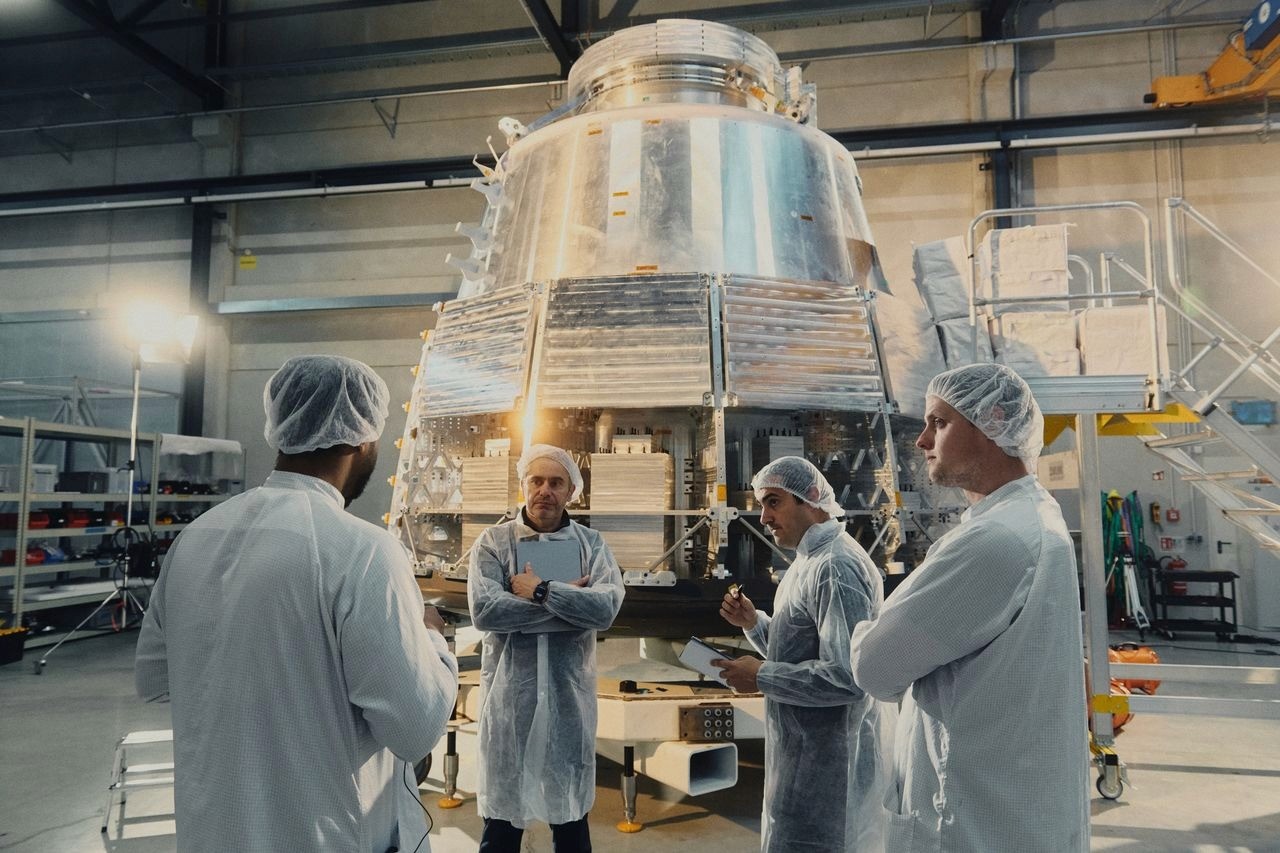
The Exploration Company
The company building Nyx is The Exploration Company, founded by Hélène Huby in 2021.
Hélène didn't grow up wanting to build spaceships. She studied economics and applied mathematics and ended up in space, as she puts it, more or less by chance. She joined Airbus in Germany in 2013, fell in love with the industry, and went on to work across ArianeGroup, Airbus's space strategy and eventually the European Service Module for NASA's Orion spacecraft.
It gave her a unique view of European space. Europe had extraordinary engineers and decades of experience building things that actually flew. Her own team was helping build the spacecraft that would take humans back towards the Moon. But Europe had stopped building its own way of getting people and cargo to and from orbit.
Hélène thought it could do more.
While at Airbus, she started to think about what could be next. Ultimately, she was joined by a small team of like-minded aerospace veterans, including Artur Koop, Jon Reijneveld, Pierre Vinet and Sebastien Reichstadt. They worked on weekends. Hélène checked herself into a hotel in Germany for three days with a spreadsheet to figure out whether any of this could actually become a business.
The spreadsheet said maybe. And that was enough.
In August 2021, they left and started The Exploration Company.
There’s some history here too. The EQT Ventures team first backed he Exploration Company in its early days. Over dinner in Paris in 2022, Hélène explained how Nyx, and the launcher she planned to build next, would work using her mobile phone and a water glass.
Four months later, EQT Ventures co-led The Exploration Company's €40.5 million Series A. We backed Hélène again in the €150 million Series B in 2024.
Since then, The Exploration Company has turned into a company of close to 600 people across Europe, the US and the UAE, building Nyx and a much bigger transportation system around it.
Today we're doubling down on Hélène and the team (quadrupling down technically?). The $450 million Series C is co-led by the Scaleup Europe Fund, managed by EQT, alongside Atomico and Bessemer.
The master plan
The plan is simple (definitely not rocket science or anything like that):
Build a reusable capsule.
Use its customers, cash flow and technology to master the full transportation stack, starting with a high-thrust engine
Use cost-competitive, frequent transport to build the services that run on top of it.
The Exploration Company’s goal is to create a space economy that isn't monopolised by a few and imported by everyone else.
Step one: the Nyx Capsule
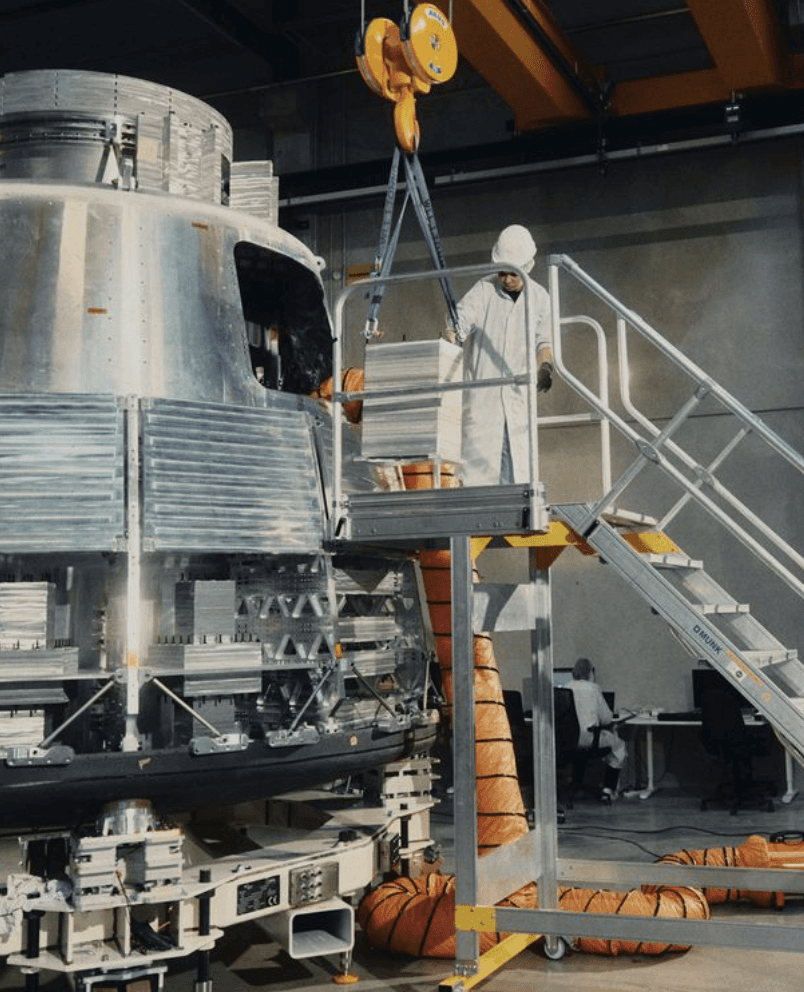
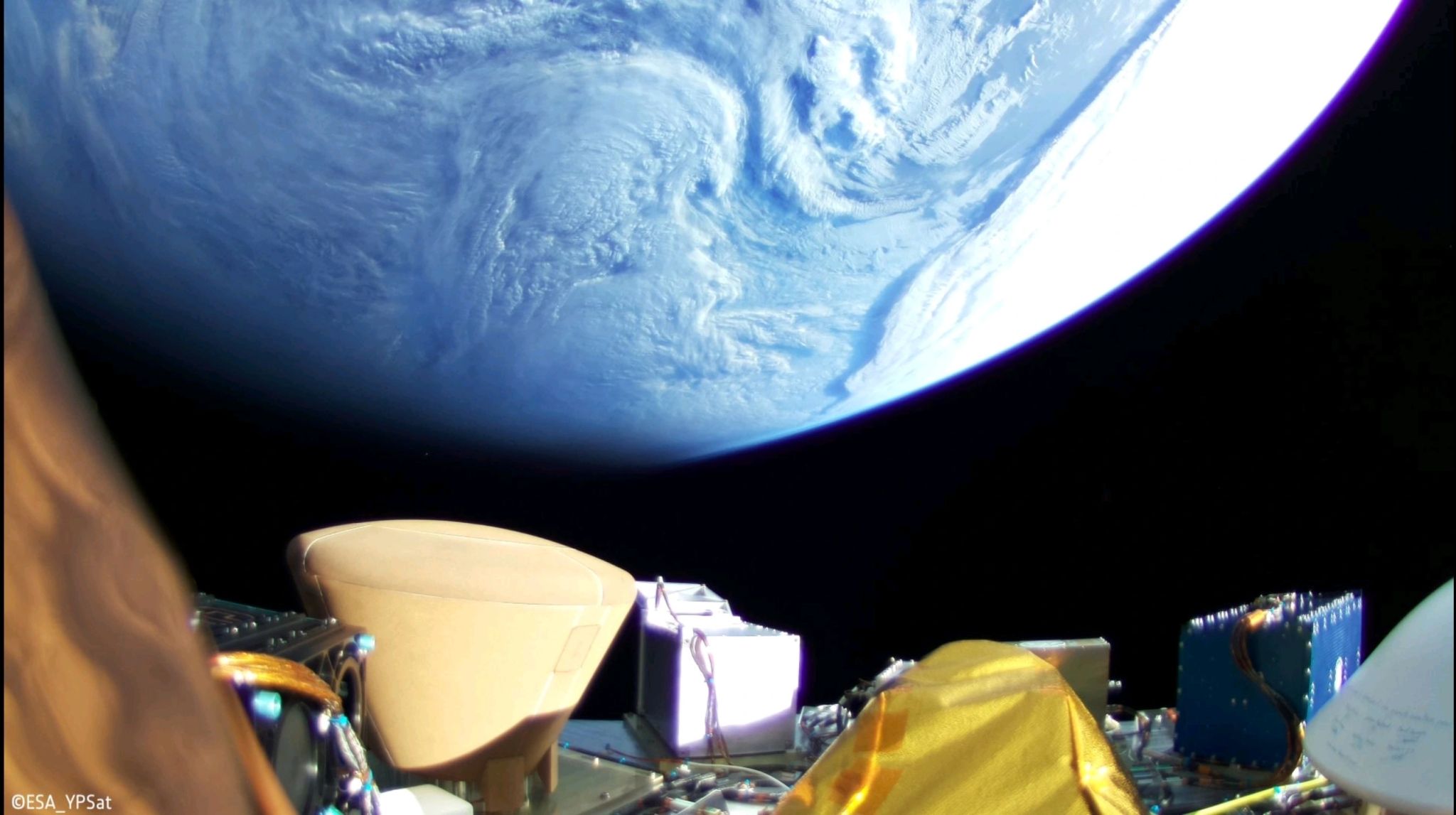
Nyx is a reusable spacecraft designed to carry roughly three tonnes to orbit and back.
It can dock with a crewed station, return valuable cargo safely, and fly on European, American, Indian or Japanese rockets. TEC sells the mission rather than the launch: delivery, docking, return and recovery.
That lets TEC own the customer before it owns the rocket.
Step two: the engine and the rocket
Nyx creates revenue, flight heritage and a customer base. It also forces TEC to master the systems needed for larger vehicles.
Storm, TEC’s reusable methane-oxygen engine, will power a reusable heavy launcher designed for station modules, constellation batches and defence infrastructure.
It needs to become a credible independent option for Europe, sovereign customers and commercial operators.
Step three: the things that run on it
Cheap, frequent transport is what makes orbital compute, in-space manufacturing and sovereign communications viable. Europe has watched this sequence once already, in AI, and is now paying to build the layer it skipped. Space is the same shape, a decade earlier. Maybe asteroid mining. Maybe a Mars Base. Who knows?
The ships between worlds
The idea is pretty simple: Europe should have a ship.
Not because every continent needs its own version of every technology company. And not because SpaceX isn't very good at what it does.
But if you want to build things in space, it could help not to depend on one company to get you there.
That is what we like about The Exploration Company. Nyx is European, but the business doesn't have to be. It can launch on an American rocket, dock with an American station and carry cargo for customers anywhere in the world.
Europe gets its own way to space. Everyone else gets another option.
Which brings us back to Dune.
The Spacing Guild figured out that you don't actually need to own the planets if you own the ships between them.
We don't expect Hélène to start wearing an enormous orange helmet.
But we do think she is building the ships.
And there is an enormous amount left to build. Space is hard. Rockets explode. Re-entry is unforgiving. Certification takes years. Building one spacecraft is difficult; building a company that routinely flies them, then a reusable rocket, is something else entirely.
There will be delays, failed tests, things that need rebuilding and probably a few plans that look quite different by the time they reach orbit.
That comes with the territory.
Kennedy's old line still works: we do these things “not because they are easy, but because they are hard.”
Hélène and the team have picked something very hard.
We're very happy to be backing them for the journey.
Godspeed, TEC.
*This is a marketing communication. Please refer to the information document of the Scaleup Europe Fund before making any final investment decisions.*
More to read
20 articles