5min read
Authors
EQT Ventures
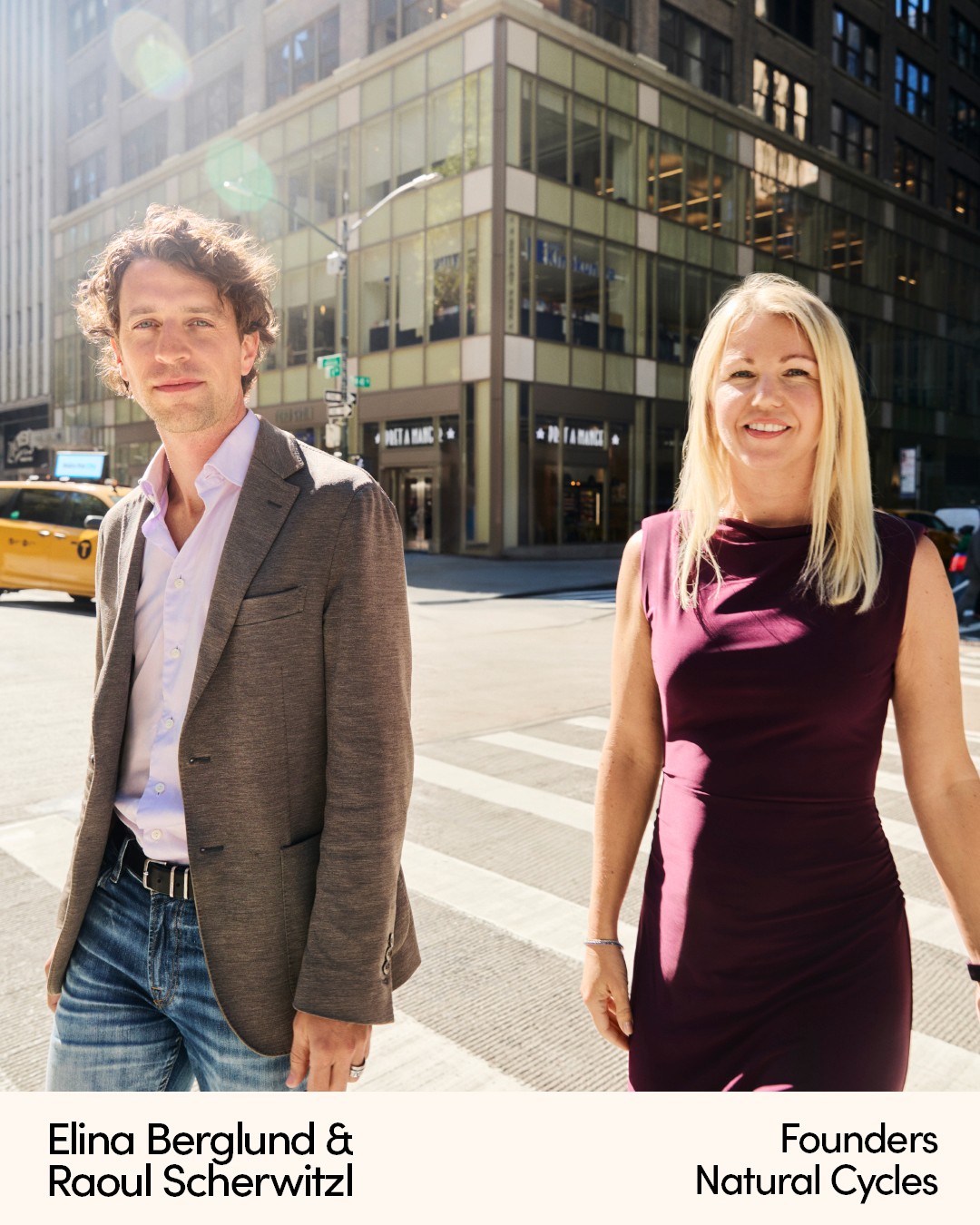
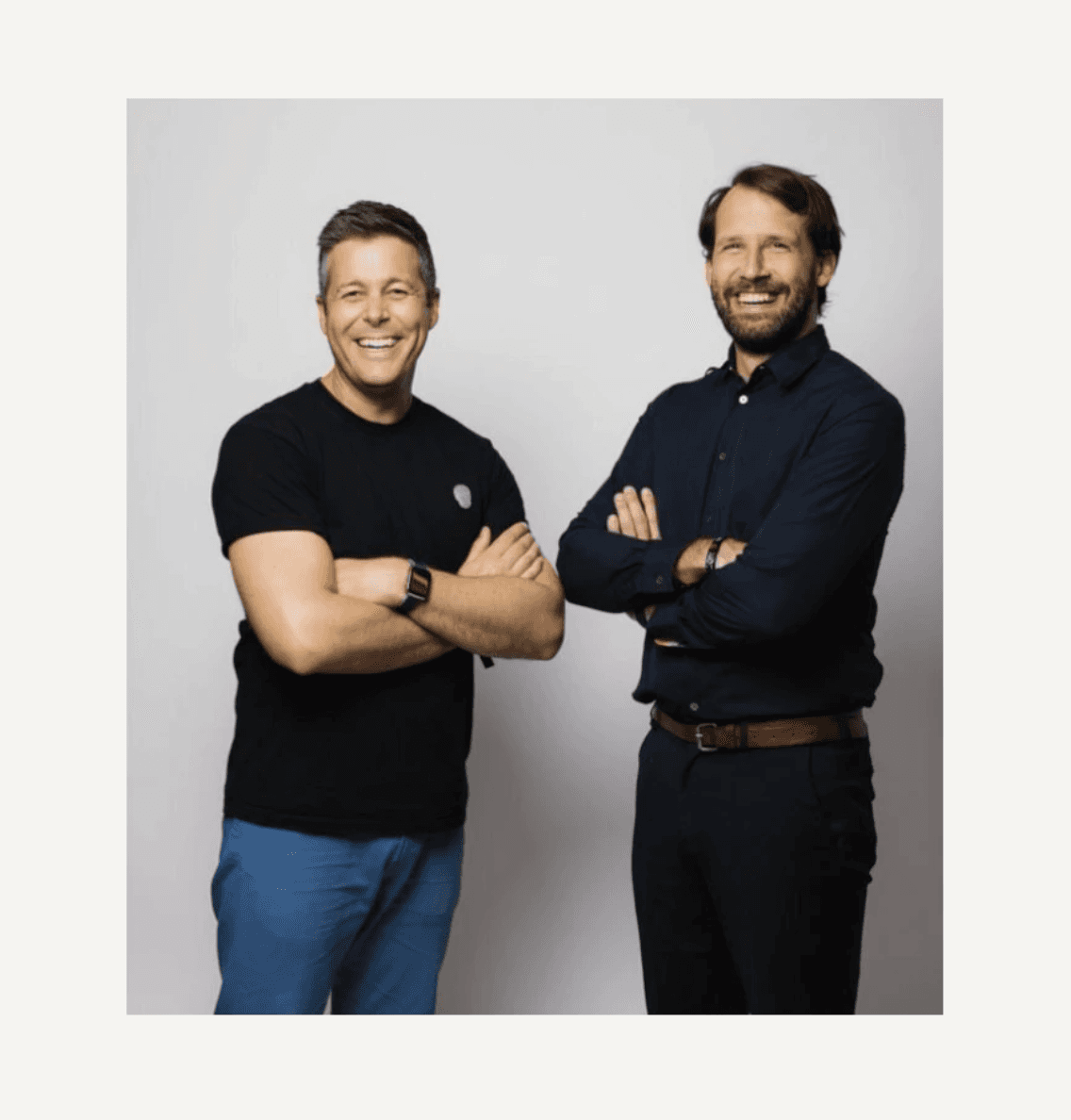
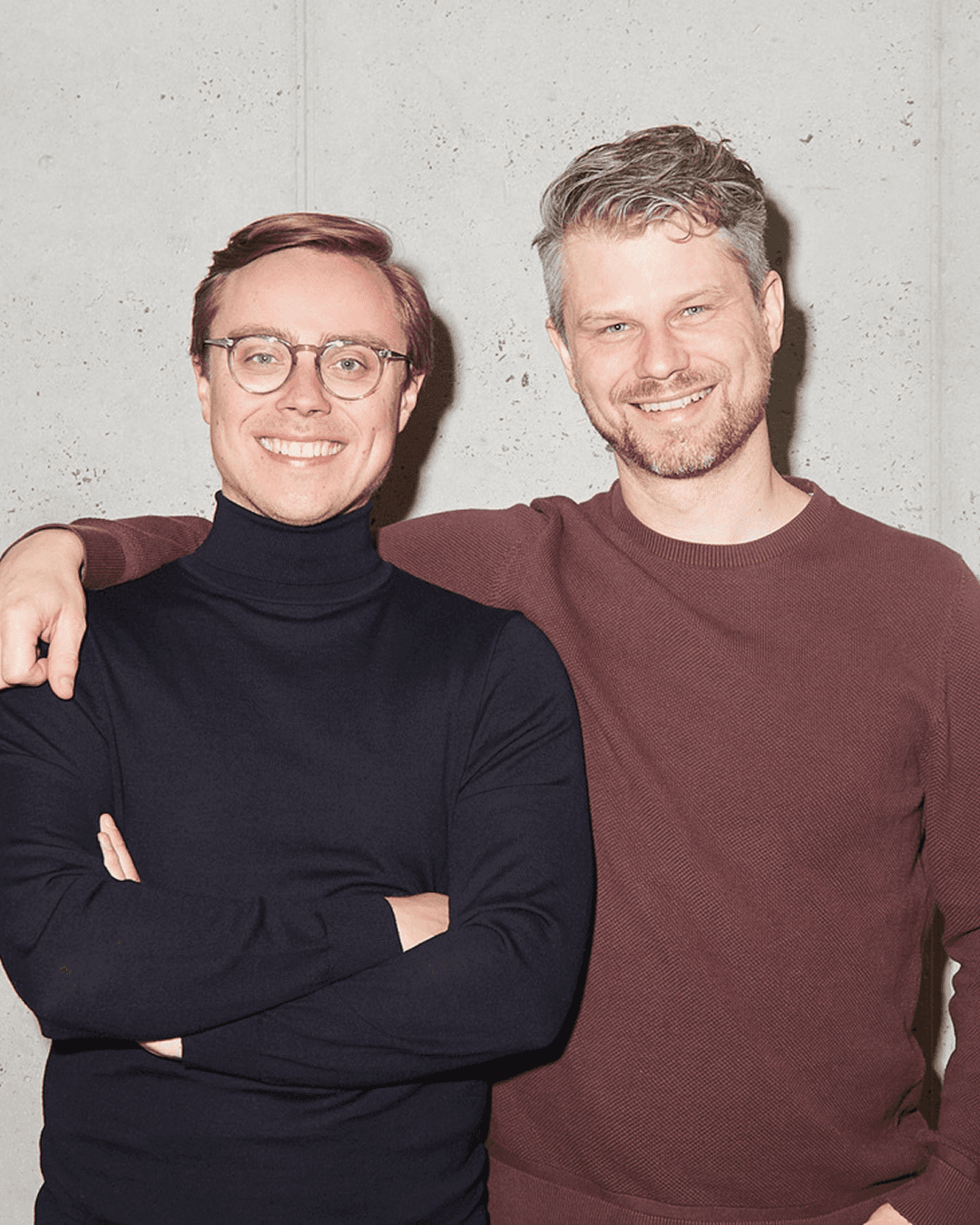
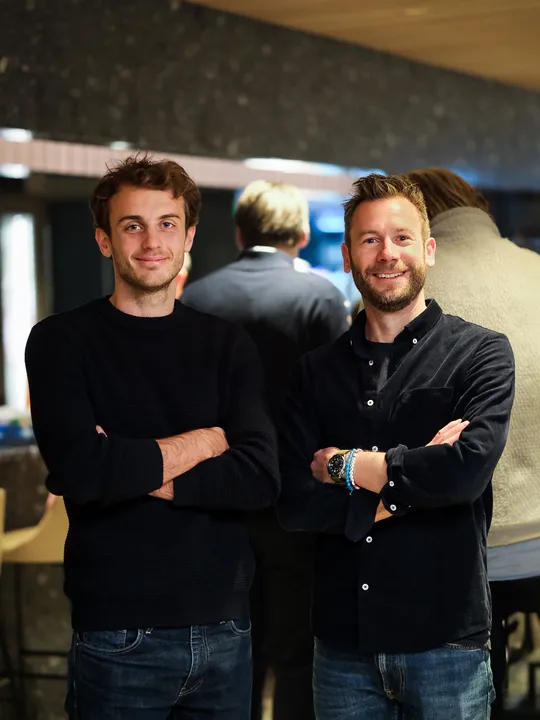
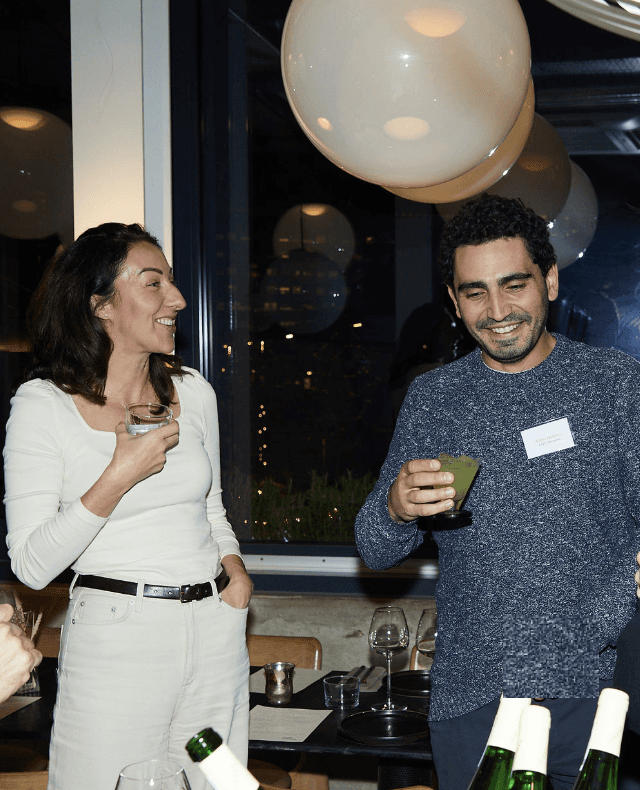
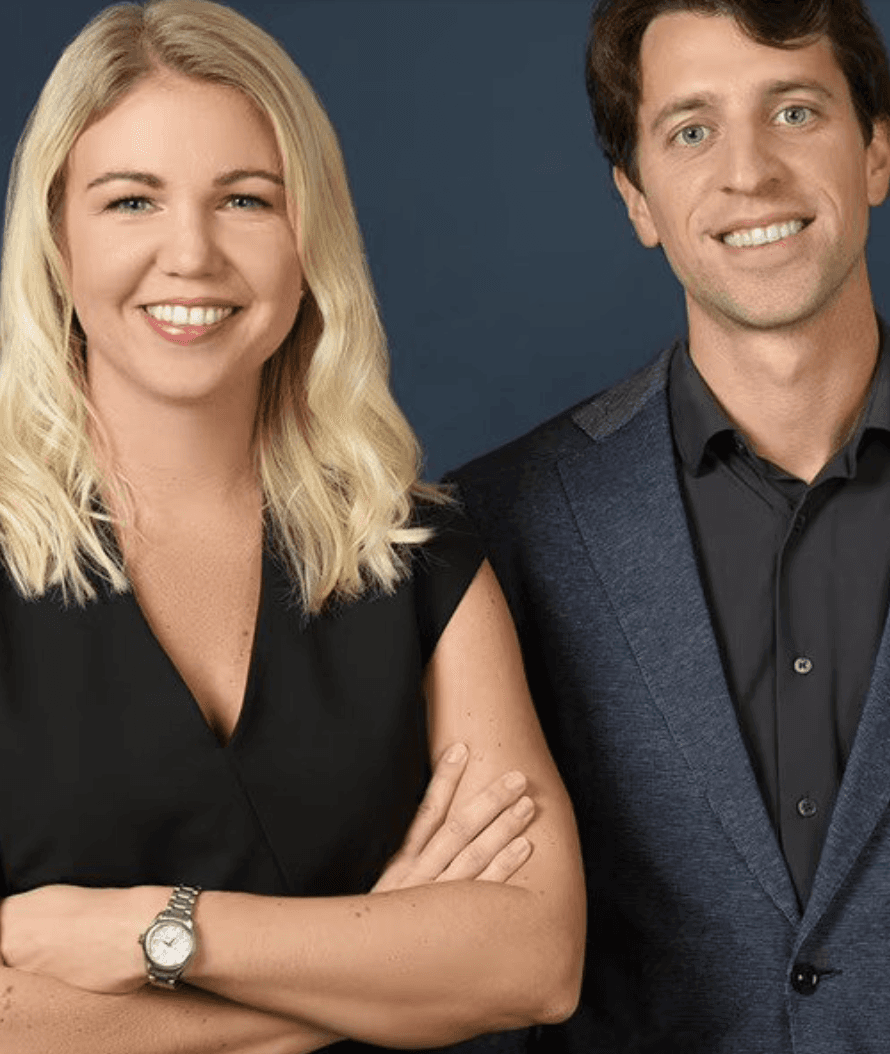
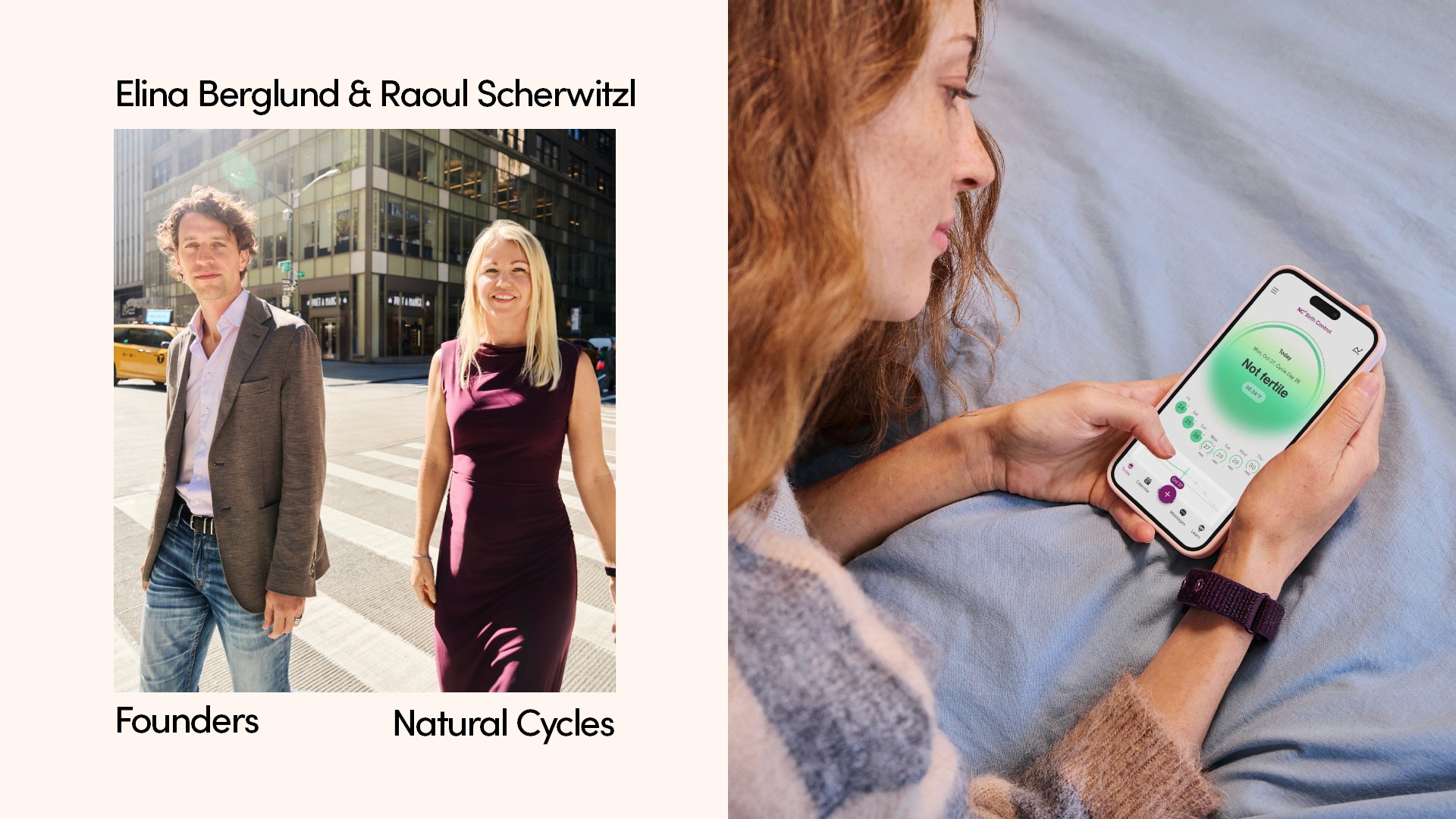
Natural Cycles co-founders Dr. Elina Berglund and Dr. Raoul Scherwitzl, a real-life husband and wife team, are transforming contraception with their innovative digital approach.
The couple first crossed paths at UC Santa Barbara, in what Raoul describes romantically as a moment straight from a Richard Curtis film: “Our hands grazed as we reached for the same textbook from opposite sides of the bookshelf; our eyes locked and in that moment…we just knew.” Elina offers a less cinematic version: “We were probably just sitting around a table doing our physics homework.”
Years later, and on a different continent, they would start Natural Cycles, the world’s first digital, non-hormonal, and non-invasive contraception. At the time, Elina was engaged in the small matter of searching for the Higgs boson at CERN, assisting with work that would later be awarded the Nobel Prize for Physics, whilst Raoul was undertaking a PhD in Condensed Matter and Materials Physics.
The idea came about in the summer of 2012; the couple had recently got married and were looking for a natural method of contraception.
“We wanted to have kids within a couple of years,” explains Elina, “and I was looking for a non-hormonal form of contraception. I couldn’t find the right solution anywhere. I had access to a number of scientific publications and started to read about how body temperature changes throughout your cycle. I started tinkering, creating the very first version of the Natural Cycles algorithm just to use myself.”
The two quickly realised that this algorithm addressed an as-yet unmet need: a birth control method by which women could track their cycles in a non-hormonal and non-invasive way. Six months later, they had quit their jobs to focus on developing the company.
With two PhDs between them, building the product was the easy part.
“As scientists, we were both trained to analyze data and write code. The difficulty came in understanding regulation and marketing the product. That’s where we had to find help,” explains Raoul.
“There is this scary moment when you start to hire people to the company you started,” continues Raoul, “where you think, ‘Ok, it’s not just consumers - I now have a responsibility to other people to make this company a success."
Without a background in business, the early days contained a lot of learning and navigation for the couple.
“We solved problems one-by-one”, says Elina. “We knew that the product worked, but we had to prove it clinically. This is a serious company with serious consequences, and we knew that we couldn’t necessarily ‘move fast and break things."
This is the mantra of many startups, but anyone familiar with regulatory processes, especially those in America, knows that it is often a treacle-like process. “Moving fast” and government-level regulation rarely go hand-in-hand.
“The European CE-marking and the FDA-clearance were both incredibly important milestones in the company”, says Raoul. “I was in the supermarket when I got the email confirming FDA-clearance. It was a funny moment of being in an incredibly mundane environment whilst receiving completely groundbreaking news. Like, ‘Oh, our company now has a certified future in helping women and families worldwide. Also, we need milk."
A month later, the couple moved to New York.
As the first product of its kind, which still remains the only certified digital contraception in the US and Europe, Natural Cycles inevitably invoked skepticism from incumbent pharmaceutical companies that were wary of the new kids on the block.
“There was a lot of doubt cast on us when we were growing,” says Raoul. “It took some time to establish ourselves on the market and become recognised enough for consumers to recognise that we are a viable alternative to contraceptive pills and condoms.”
In the early days, there were instances where skepticism became criticism. Negative publicity is difficult to navigate for any company at any stage, but especially so for a young startup recently launched in a new market.
Elina is contemplative about it.
“It was clear from the start that this is a product that women want and therefore needs to be on the market,” she explains. “There was no other effective solution to natural contraception and that made it so obvious that we needed to stick with it. We’re both extremely resilient, so there was never a doubt in our minds that we would capitulate.”
It was precisely this resilience that attracted EQT Ventures to the company. By the time EQT Ventures led the company’s Series B funding round in 2017, Natural Cycles had already demonstrated both scientific credibility and strong early market traction.
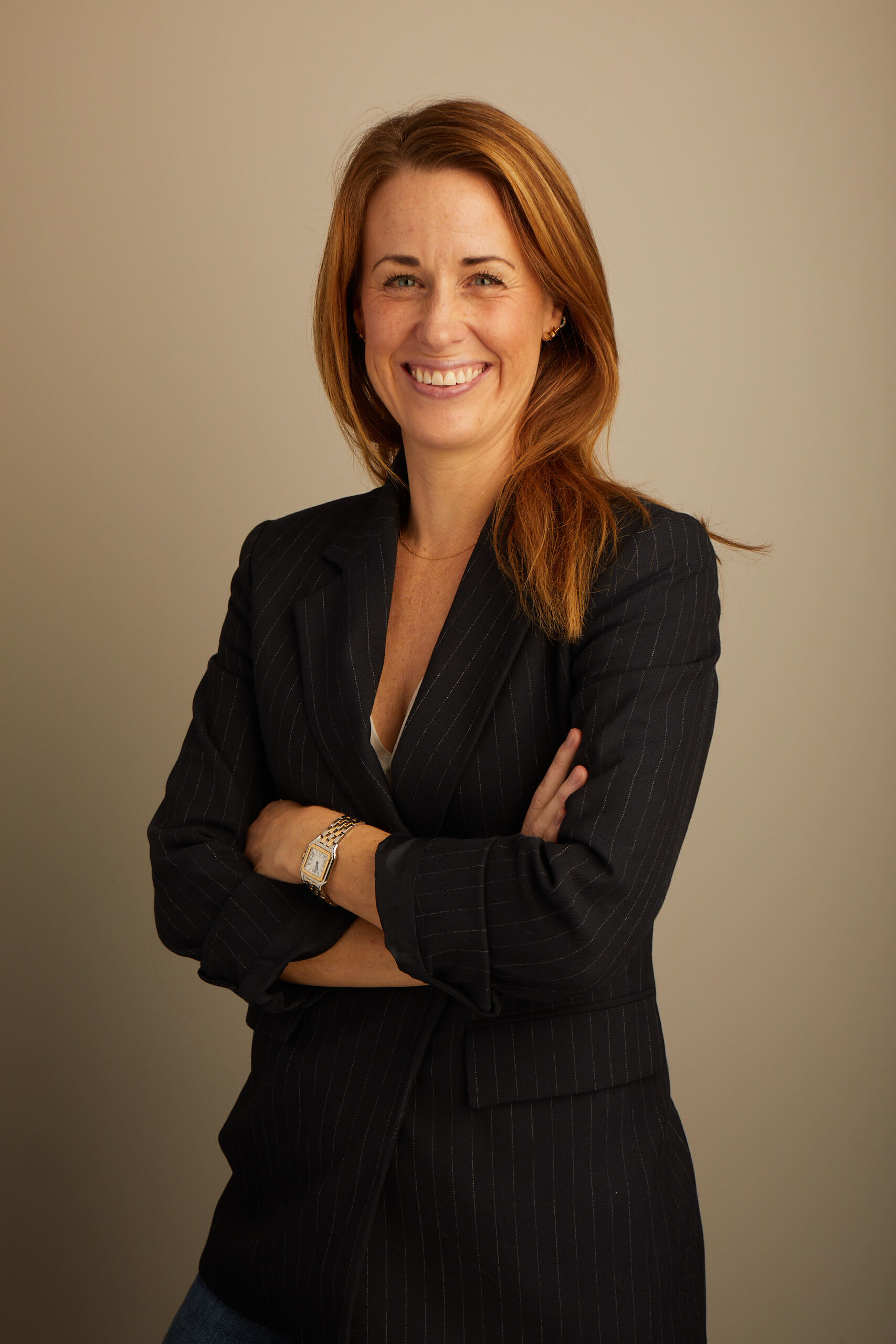
Today, Carolina Brochado, Partner and Head of EQT Ventures, sits on the company’s board.
“When you look at the Natural Cycles story, what stands out is the founders’ tenacity,” says Carolina. “Building a company at the intersection of healthcare, regulation and consumer technology requires an unusual level of resilience, discipline and building for the long-term. Elina and Raoul have demonstrated both.”
EQT Ventures has worked closely with the company for years as it scaled globally.
“Natural Cycles is a great example of a company that created an entirely new category,” Carolina continues. “Digital contraception did not exist before they built it, and bringing that to market required scientific rigor, regulatory breakthroughs and a willingness to challenge a very established industry.”
Wearables integration would later prove to be a major inflection point for the company.
“That phase required patience,” explains Elina. “Scaling a regulated healthcare product globally takes time, and EQT Ventures stayed supportive through that period. That’s exactly what you want from an investor.”
Wearable integration was far from inevitable, though.
“I wish we could say that we knew it was going to happen,” says Elina, “But really we just spent a lot of time saying, ‘Oh, imagine if the Apple Watch had a temperature sensor’. And then it got one.”
As Natural Cycles has grown, so has the scope of the company’s work. What began as a software algorithm has evolved into a broader reproductive health platform that now also includes hardware, such as the NC° Band and integrations with wearable devices like the Oura Ring and Apple Watch.
Moving from pure software into hardware-enabled solutions has allowed the company to make fertility tracking more seamless and accessible for millions of users around the world.
With this growth has also come a larger role in shaping the broader conversation around women’s health.
As the company has scaled globally, Natural Cycles increasingly engages on a societal and policy level. In Sweden, for example, the company is actively advocating for fairer regulation for women’s health, including campaigning against the high and unequal VAT placed on non-prescription birth control.
What started as a scientific innovation has grown into a company working to improve not only technology, but also the structural conditions around reproductive healthcare.
Despite soaring user uptake, operating in over 160 countries, three funding rounds, and Elina being named Entrepreneur of the Year 2025 by Dagens Industri’s “Sweden’s Most Powerful Women in Business”, the couple still see these as early days for the company.
“Like every software company, AI is revolutionizing our models,” states Elina. “We’re so excited about how it is accelerating our algorithms, and LLM models have amazing potential for the UX of the platform.”
Carolina agrees.
“The potential market for Natural Cycles remains enormous,” she says. “It’s rare to see a company combine deep science, global regulatory approval and consumer adoption in this way. Elina and Raoul have built something truly category-defining, and we believe the journey is still in its early chapters.”
More to read
20 articles